Oracle Fusion Field Service 26A: Intelligent, Integrated, and In-Vehicle Field Service

From AI-powered knowledge assistance to in-vehicle applications and unified data flows across Oracle's ecosystem, this release transforms how organizations deliver field service.
1. Unified Service Operations: Breaking Down Data Silos
The flagship enhancement in 26A is the native integration between Oracle Fusion Service and Oracle Fusion Field Service. This isn't just another integration—it's a fundamental shift in how work order data flows between systems.
What's New: Work Order data stored in Oracle Fusion Service now appears directly within Field Service without duplication. Mobile workers can view comprehensive work order details including customer information, addresses, asset identifiers, and custom Descriptive Flexfields—all in real-time. Updates made by technicians sync back automatically to the originating work order.
The Impact: Organizations eliminate the need for Oracle Integration Cloud accelerators to sync data between systems. No more field synchronization, no custom property creation, and no complex field mapping. The Fusion-native approach means simpler implementation, reduced maintenance overhead, and automatic access to future enhancements. For mobile workers, it means having complete job context without switching applications.
2. Generative AI Knowledge Assistance: Intelligence at Your Fingertips
Building on Oracle's existing semantic search capabilities, 26A introduces advanced large language model (LLM) technology to transform how mobile workers access knowledge.
What's New: The AI system now generates concise, authoritative summaries from Oracle Knowledge Management articles rather than just matching keywords. An enhanced semantic ranking engine ensures technicians see the most relevant procedures, troubleshooting steps, and safety instructions first. Every answer includes clear citations to original sources for traceability.
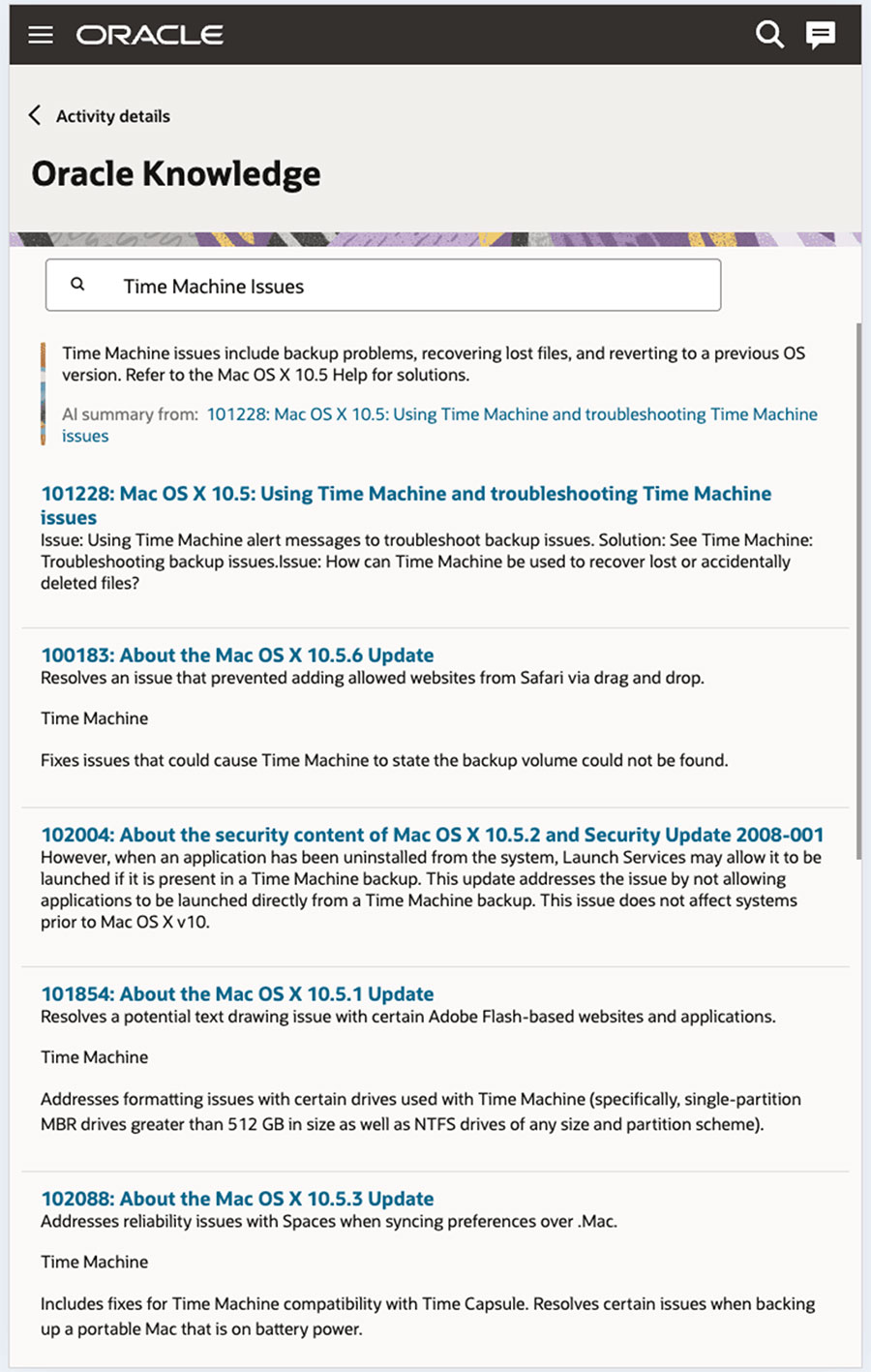
The Impact: Technicians encountering unfamiliar fault codes or equipment issues get instant, context-aware answers without scrolling through lengthy manuals. The system tailors responses based on the active job context, ensuring every answer is relevant and actionable. Result: faster resolution times, higher first-time-fix rates, and reduced dependency on expert escalations.
3. Maintenance Work Order Integration: Unified Maintenance Operations
For organizations using Oracle Maintenance, 26A delivers native visibility of Maintenance Work Orders and Operations within Field Service.
What's New: Mobile workers can see Maintenance Work Order details—work order number, description, priority, status, operation sequences, and planned dates—directly in Field Service. Descriptive Flexfields are fully editable, enabling technicians to record measurements, observations, and inspection notes. When activities complete in Field Service, the corresponding maintenance operations automatically complete.
The Impact: Telecommunications teams inspecting fiber hubs, utilities teams checking substations, or any organization performing preventive maintenance can now operate with complete work order visibility without system-switching. No data duplication, no synchronization delays, just live maintenance data supporting corrective, preventive, inspection, and asset-driven service work.
4. Android Auto and Apple CarPlay: Field Service Meets the Vehicle
26A brings Oracle Fusion Field Service into the vehicle through Android Auto and Apple CarPlay integration, creating context-aware, safety-focused interfaces for mobile workers.
What's New: When technicians connect their devices to compatible vehicles, Field Service automatically displays on the infotainment screen. They can start routes, view activity details, navigate to customer sites, and make customer calls—all through a minimal, low-touch interface designed specifically for driving contexts. The system displays prompts based on movement and job status: start route at day's beginning, start activity when arriving at location, end route when all jobs complete.
The Impact: Mobile workers gain hands-free access to essential field service functions while maintaining focus on safe driving. Route launches happen from the dashboard, customer communications use voice capabilities, and job transitions occur without opening the mobile app. The feature remains inactive when routes aren't active or location permissions aren't properly set, ensuring security and intentional use.
5. Machine Learning-Enhanced Travel Estimation
Travel time accuracy gets a major boost through machine learning that adjusts map-based estimations using historical data.
What's New: The system now analyzes the typical difference between map providers' estimated travel durations and actual time reported by mobile workers. It applies these learned adjustments to all map-based travel estimations—Street-Level Routing, real-time traffic, and point-to-point calculations. Administrators can set minimum and maximum adjustment ranges to prevent unrealistic modifications.
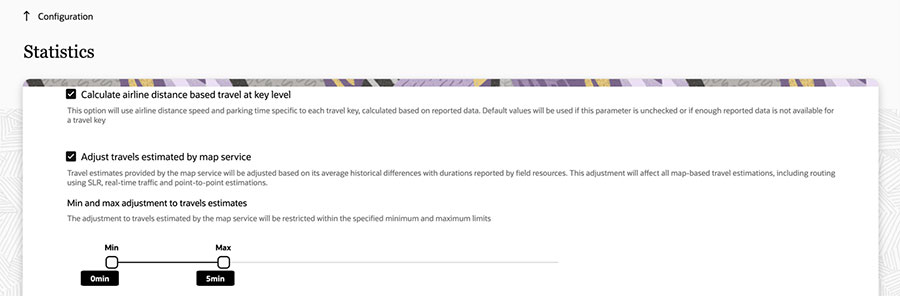
The Impact: Telecommunications providers operating in dense cities can account for parking time and building access delays. Utility companies can factor in walking time from vehicle to asset locations. The result: more realistic schedules, reduced late arrivals, fewer missed SLAs, and fairer workload distribution across the mobile workforce.
6. Enhanced Plugin Capabilities: Forms Meet Plugins
The Plugin API receives significant enhancements that blur the line between custom plugins and native forms, enabling rapid workflow changes without rebuilding plugin interfaces.
What's New: Plugins can now open and manage core Field Service forms for Resources, Activities, or Inventory directly. They can pre-fill form data, work offline, manage form drafts, and query submitted forms. The Forms & Plugins configuration page adds a three-column layout showing offline caching status, configured button counts, and modification tracking.
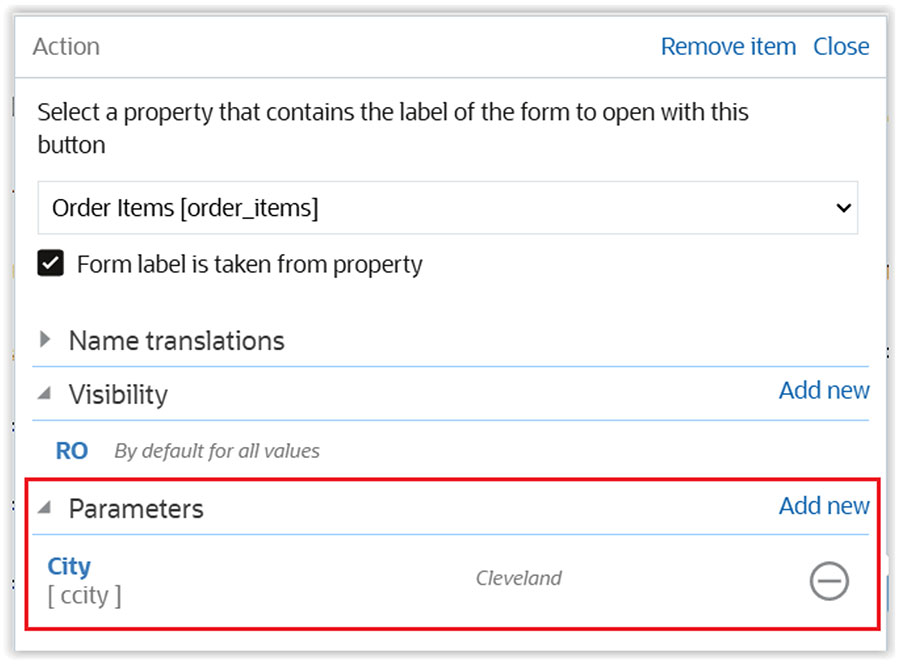
The Impact: Organizations using custom plugins gain the ability to modify mobile worker workflows on-demand without plugin redeployment. Business users can make changes themselves, reducing dependency on IT development cycles. For complex workflows involving asset installation, validation, and inspection, plugins can orchestrate entire processes while leveraging native form capabilities for data collection.
7. Standardized API Connectivity for Plugins
Plugin development becomes significantly simpler with standardized access to REST APIs across the Fusion ecosystem.
What's New: Plugins now obtain environment names and REST API URLs directly through the Plugin API. A new getAccessTokenByScope procedure provides standardized OAuth access token generation for both Oracle Field Service and Fusion product APIs. The legacy Applications configuration for Asset Details and Debriefing pages is eliminated—these pages now work out-of-the-box.
The Impact: Plugin developers benefit from consistent authentication patterns across all Fusion products. Less configuration overhead, clearer security boundaries through scopes, and simplified integration logic. The standardized approach accelerates custom integration development while improving security and maintainability.
8. Message Scenarios Meet Integration Events
Communication automation gets more flexible with the ability to use message scenarios through the Events API.
What's New: Message scenarios can now specify "Integration Event" as a delivery channel. When message steps execute, the system generates messageStepTriggered events containing message details, activity context, inventory context, and resource information. External integrations can subscribe to these events to trigger SMS notifications, email alerts, or other communication channels.
The Impact: Organizations can leverage message scenarios' power and flexibility while integrating with modern REST API-based communication platforms. No custom development needed for common use cases like appointment reminders or service notifications. The approach supports scalable, real-time customer engagement with lower operational overhead.
9. Simplified Fusion Attachments Configuration
Attachment management between Field Service and Fusion Service becomes dramatically simpler.
What's New: When using Fusion attachments, organizations no longer need to create or maintain application authentication for Fusion API access. Files added in Field Service transfer to Fusion work orders automatically, and vice versa. The system tracks who performed each attachment action using user assertion flow.
The Impact: Reduced configuration effort, improved operational efficiency, and less administrative overhead for attachment management. Organizations can focus on service delivery rather than integration maintenance.
10. Enhanced API Control for User and Resource Management
Fusion Field Service gains more precise control over which fields can be updated through Core APIs.
What's New: The Update User API now restricts changes to specific fields: date formats, self-assignment settings, organizational units, resources, user types, and week start preferences. Similarly, the Update Resource API for field resources limits modifications to duration statistics, organization, parent resource, resource type, and custom properties.
The Impact: Tighter security boundaries and more predictable API behavior. Organizations can confidently automate user and resource management through APIs knowing exactly which fields can and cannot be modified, protecting data integrity while enabling operational automation.
Looking Ahead
Oracle Fusion Field Service 26A demonstrates Oracle's commitment to making field service management both more powerful and more accessible. The release eliminates traditional pain points—complex integrations, disconnected data, limited mobile capabilities—while introducing cutting-edge technologies like generative AI and in-vehicle applications.
For organizations currently running older versions, 26A presents a compelling upgrade case. The unified operations model alone delivers significant value through reduced integration complexity. Combined with AI knowledge assistance, in-vehicle capabilities, and maintenance integration, the business case becomes overwhelming.
For organizations evaluating field service platforms, 26A showcases Oracle's ability to innovate while reducing technical debt. The Fusion-native approach, standardized APIs, and intelligent automation position Oracle Field Service as a platform built for both current operational excellence and future innovation.
As field service continues its evolution from cost center to competitive advantage, organizations need platforms that enhance worker capability while simplifying operations. Oracle Fusion Field Service 26A delivers precisely that combination—making powerful capabilities accessible while removing operational friction.
The future of field service is intelligent, integrated, and increasingly mobile. With the 26A release, Oracle demonstrates that this future is available today.
Full features released can be reviewed at Oracle.
Author: Alf Martin
Alf is a digital transformation and Oracle cloud specialist, serving currently as Capability Lead at Kyte Consulting, Alfred is driving adoption and capability around Oracle’s Asset-Based Service flows — a set of business processes central to organisations with intensive asset operations such as utilities, ports, mining, and similar industries. In this capacity he specialises in Oracle Fusion modules that support these flows, including Maintenance Cloud, Inventory, Service, Subscription Management, Field Service and Service Logistics models, helping organisations connect operational data with service execution. This work builds on his practical experience in both ERP and CX domains to deliver strategic outcomes and business value.